
UXCamp 2025 wrap - and a look at 2026
It's hard to believe we're already looking back on a third UXCamp. When a group of us put our hands up in 2023 to bring the unconference format to Melbourne, we had no idea what it would grow into.
UXCamp Melbourne 2025: Our biggest year yet
It's hard to believe we're already looking back on a third UXCamp Melbourne | Naarm. When a group of us put our hands up in 2023 to bring the unconference format to Melbourne, we had no idea what it would grow into. Two sold-out events later, I wrote about founding and directing a sellout UX unconference and what that journey had looked like. This is the update to that story.
2025 was our biggest event yet — and in many ways, our most significant.
Making it official: UXCamp Naarm Incorporated
One of the biggest milestones of 2025 had nothing to do with the day itself. We formally registered UXCamp Naarm as a not-for-profit incorporated association in Victoria at the end of 2025.
This has been a conversation since the very beginning. As much as UXCamp started as a scrappy community passion project, and still very much is at its heart, the reality of running an event of this scale requires structure. Getting incorporated gives us the ability to invoice sponsors directly, present a proper value proposition for their investment, and formalise the why behind UXCamp in a way that feels lasting and credible. It also gives the team some important legal clarity, and frankly, it's the right thing to do when you're stewarding something that belongs to a community.
There was something genuinely meaningful about making it official. UXCamp is no longer just an event that happens - it's an organisation with a mission, a governance structure, and a future. That feels good.
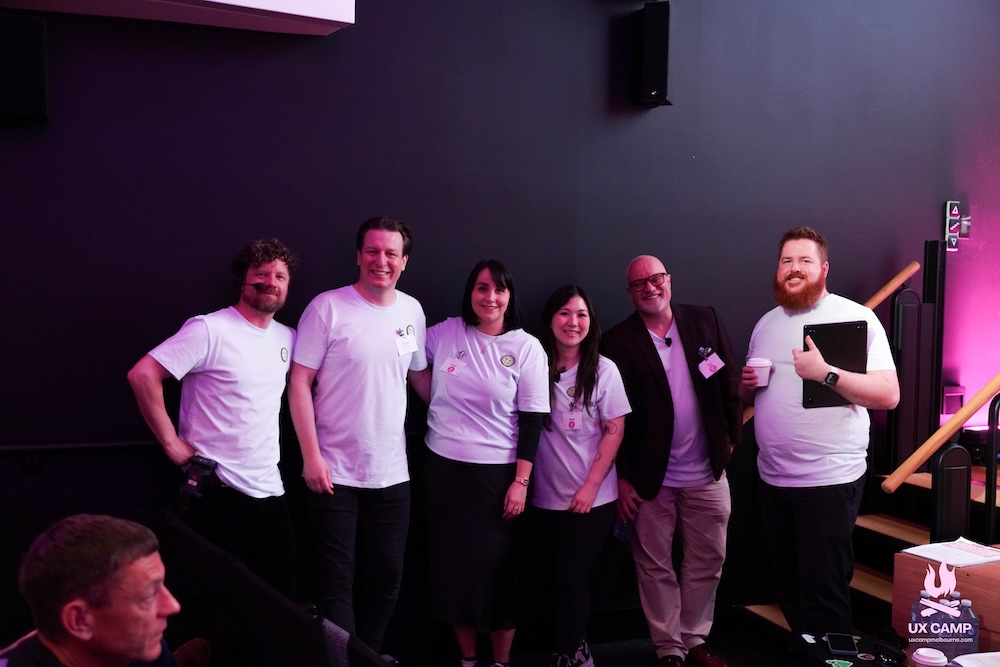
A volunteer-led effort, as always
If you know me, you know that volunteering has been a central tenant of my existence since high school. UXCamp has always been run entirely by volunteers. Our small but mighty team of seven gave their time, energy and expertise to make the day happen - and I continue to be in awe of what this group pulls off.
A few people I want to specifically call out this year:
Mickey drove our sponsorship engagement and delivered our highest sponsorship levels to date. That funding is what makes the event accessible for everyone from students to professionals.
Lauren took on the overall event leadership, owning relationships with partners including the venue, and ensuring the day ran smoothly from top to bottom. Lauren's leadership was a big reason the day felt as polished as it did.
Mindy led our first-ever formal on-the-day volunteer team, which was a great new change. Having a coordinated group supporting the flow of the day made a real difference for attendees, like smoother check-in, better session transitions, and a more supported experience throughout.
And of course, Troy - my not-work bestie - co-MC'd the day alongside Mindy and was, by all accounts, very popular with the crowd. Whether Troy comes back next year remains to be seen. (Troy, if you're reading this: we'd love to have you.)
As always, the mix of people on the organising team shifts year to year as lives and commitments evolve. That's the nature of a volunteer-run community event, and I think it's actually one of its strengths - fresh perspectives and energy each time.
The day itself: 32 pitches, 16 talks, one great crowd
On paper, the unconference format sounds chaotic. And honestly? It absolutely is, in the best possible way.
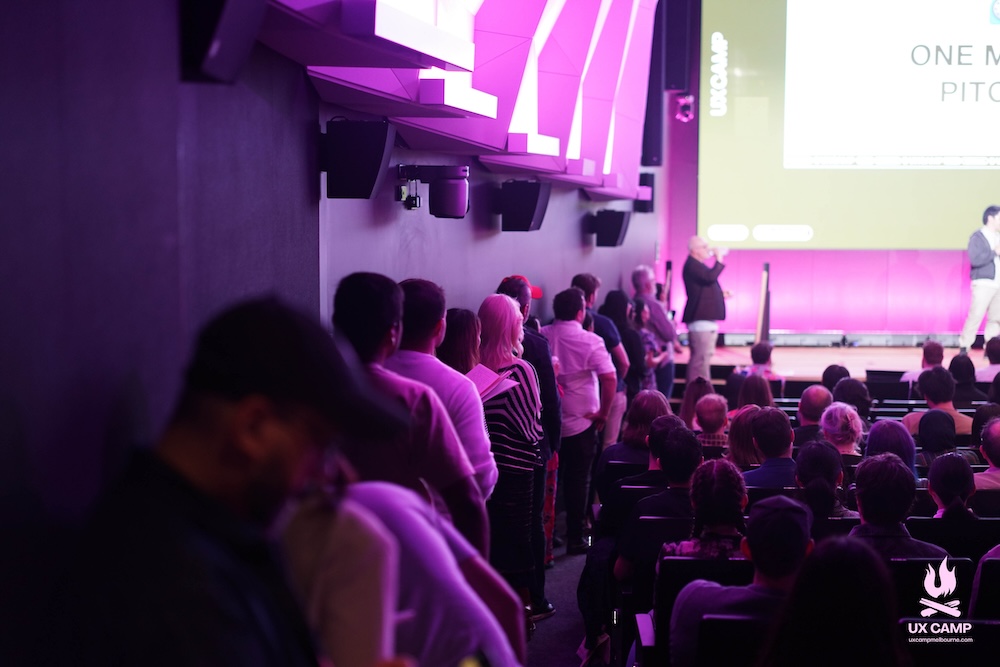
Other than the keynote, every single talk at UXCamp is made up on the day. Attendees pitch their ideas in the morning, the crowd votes, and we schedule the day from there. As Program Director, that scheduling process is one of the most intense and rewarding parts of my role, and this year it was bigger than ever.
We had 32 pitches. Thirty-two. That's a record for us, and a testament to the quality and confidence of our community. From those, we scheduled 16 talks across our available slots based on the votes of attendees. The process of building that schedule on the fly, making sure topics are balanced, rooms are appropriately sized, and the flow of the day makes sense is one of the things that makes UXCamp unlike anything else. The agenda belongs to the people in the room. And my pitch to the community: make my day as difficult as possible. It makes it better.
As an organiser, unfortunately I rarely get to sit in on sessions (though I edit the recordings after, so I get to experience it in the edit bay). There's always something that needs doing, a problem to solve, a timeline to keep. But what I do get is the energy in the hallways and the feedback at the end of the day. And this year that energy was electric.
Anthony DiSpezio's keynote: designing in the age of efficiency
We were fortunate to have Anthony DiSpezio from Figma open the day with a keynote that felt tailor-made for where the design community is right now.
Anthony spoke about how to advocate for design in an age of efficiency - a topic that clearly resonated. Design teams across the globe are navigating high-speed, high-pressure landscapes, often being asked to do more with less. His talk was a call to focus on what makes design genuinely powerful: staying creative, strategic and resilient when everything around you is moving fast and the pressure is on.
It was the right talk at the right time. You could feel it land.
Capturing the day
One thing we did differently in 2025 was bring in formal photographers and videographers to document the event. It's something I'm really glad we did. As organisers, we're so often in the weeds that we miss the moments everyone else is experiencing - the energy in a packed session room, the hallway conversations, the lightbulb moments. Having a professional team capture those means we can share them with the community and build towards richer marketing content for future events.
It also means the story of UXCamp 2025 can live beyond the day itself, which feels important.
What I took away
Every year I learn something new from running this event. But if I had to distil year three into a single insight, it's this: connecting community is genuinely, deeply important.
Not just as a nice-to-have. As a necessity for people in our industry. UXCamp gives people new perspectives, a renewed sense of focus and drive, and the rare chance to see how others are solving the same problems they are. I see it in the pitches. I see it in the conversations. I see it in the way people leave the day energised in a way that's hard to manufacture.
That observation has started shaping how I'm thinking about what comes next.
What's next?
We're in the early stages of planning for 2026, and I'll say this: we're thinking bigger.
Not just in terms of another event - though yes, UXCamp will be back - but in terms of how we can support the Melbourne design community in new and expanded ways beyond a single day each year. We're also looking to bring more volunteers into the fold, because the more people who feel ownership of this thing, the stronger it becomes.
That's about as much of a sneak peek as I can offer for now. But if you've been to UXCamp before, or if you've been meaning to come along, stay tuned. 2026 is shaping up to be something special.
And as always: thank you to every single person who pitched, attended, volunteered, sponsored, or just cheered from the sidelines. UXCamp is yours. We just run the schedule.

Joshua Holmes
Josh is a product, customer and experience design leader based in Melbourne, Australia.
He's been working in the design and digital space for 8+ years and in leadership roles for over 10 years across several industries.

